MOWSES Project Launches New Video on Sustainable Steel Production
Steel is a fundamental material for bridges, buildings, and critical infrastructure. However, steel production is also energy-intensive and responsible for significant CO₂ emissions. One of the most effective ways to reduce this footprint is by increasing the use of scrap. While scrap-based steelmaking supports the circular economy, it also introduces residual elements that can influence material properties, weldability, and long-term performance.
The newly launched video explains how MOWSES addresses this challenge. Within the project, steels with different combinations of residual elements are produced and systematically tested. The research focuses on understanding how these elements affect mechanical behaviour, especially in welded structures.
By defining safe limits for residual elements, MOWSES aims to demonstrate that greener, scrap-based steels can meet the strict safety requirements needed for critical infrastructure. The project combines industrial-scale steel production, advanced laboratory testing, and scientific analysis to support evidence-based guidelines for sustainable steelmaking.
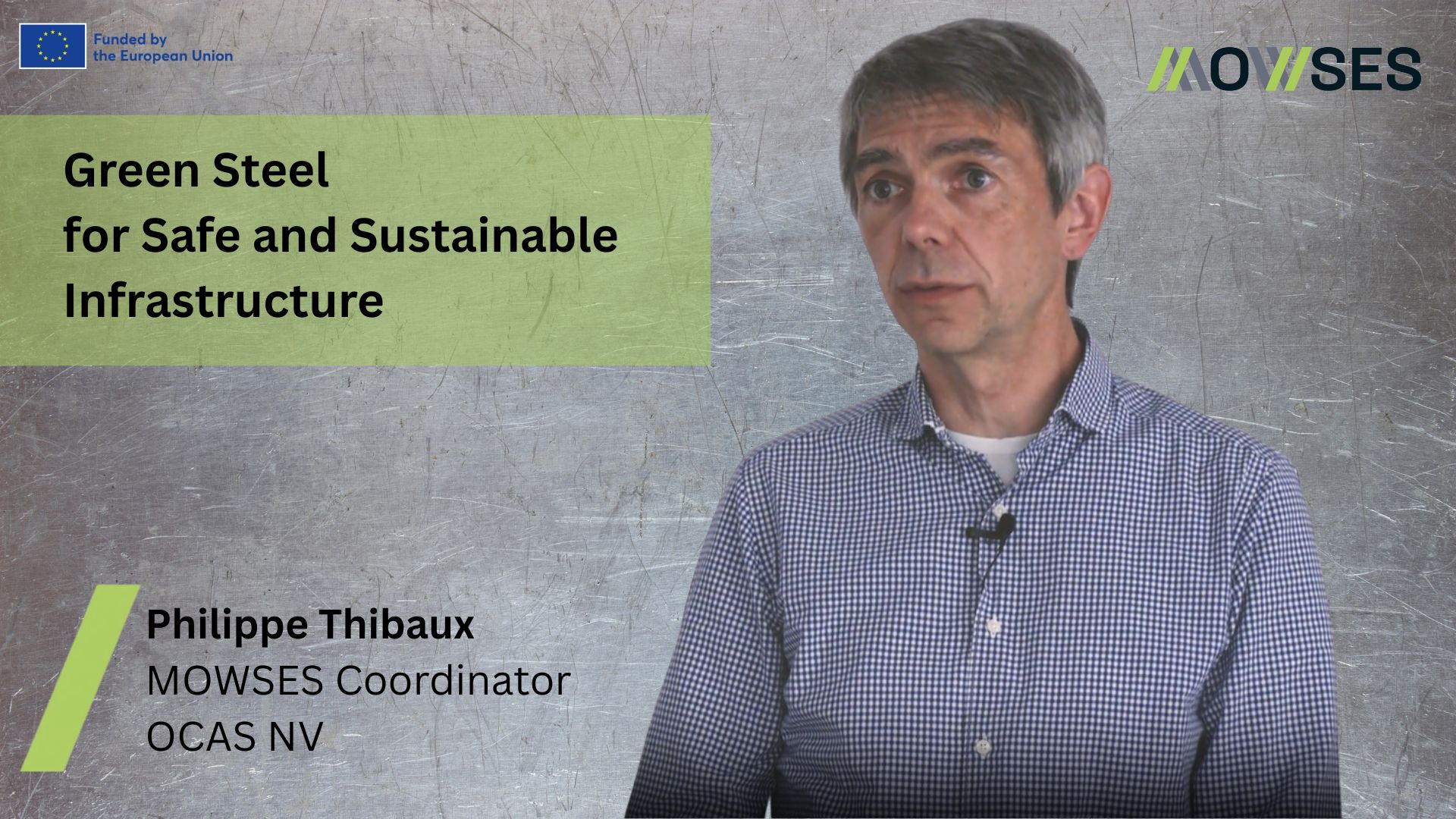
The video provides a concise overview of the project’s motivation, approach, and expected impact, making it accessible to both technical and non-technical audiences. Project coordinator Philipp Thibaux from OCAS guides us through the video, highlighting how sustainability and safety can go hand in hand as the European steel sector moves towards a lower-carbon future. The video development was led by our partner EURICE GmbH with strong contributions by our communication committee in an effort to make complex scientific research accessible to the public.
▶️ The video is now available here.